
Autonomous workflows let software handle routine business tasks and call people only when judgment is needed. They bring speed, steadier quality, and more time for skilled staff. Companies should start with one low-risk task and set clear limits. Trust and oversight will decide who leads.
Overview
Autonomous workflows move routine work forward on their…

Artificial intelligence has moved into everyday business. Companies use it at enterprise scale to write code, analyse information and automate routine work. But adopting an AI tool no longer sets a business apart.
As access to powerful models spreads, the opportunity lies in how organisations apply the technology. The window to establish an AI advantage…
For years, the customer journey followed a familiar pattern. People searched online, browsed results, visited company websites, and compared products or services before deciding. That process is now changing.
More buyers are turning to AI assistants as their first point of reference. Instead of opening multiple websites, they describe what they need in a conversation…
AI is moving from experimentation into everyday business operations. Companies are using it to analyse information, support employees, and automate routine tasks. Yet some businesses continue waiting for the technology to become more reliable. Their concerns are understandable. AI still produces errors and raises security, privacy, and compliance questions.
However, waiting for a perfect solution…
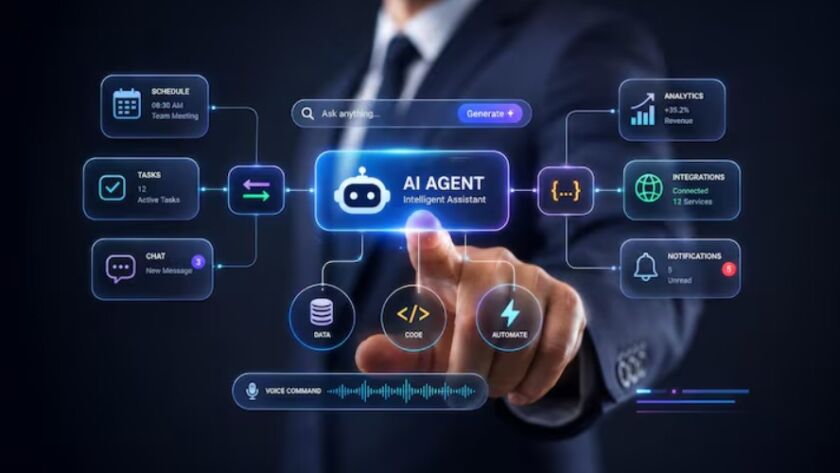
Reading Time: 4 minutes The Rise of AI Agents: A New Way to Interact With Business Software
The Next Market Leaders Will Be Defined by AI Capability, Not Company Size, and Leadership Decisions Will Decide Who Turns AI Into Real Results
The next market leaders will be the companies that turn AI capability into measurable business results, and a company's size will matter far less than the quality of the decisions its…
Businesses are moving beyond AI pilot projects to enterprise-wide operating models, reshaping workflows, decision-making, governance and workforce responsibilities to improve productivity and deliver measurable business results.
Artificial intelligence is moving beyond pilot projects as companies rethink workflows, decision-making, governance, and workforce responsibilities to deliver measurable business results. Businesses are increasingly focusing on integrating AI into…
Waiting for AI to mature may cost more than adopting it now. Deloitte's 2026 report surveyed 3,235 senior business and IT leaders in August and September 2025. Only one in four leaders said their company had moved at least 40% of its AI pilots into production. The answers are self-reported. Even so, they…
AI Search is Changing Traditional Online Discovery as Users Turn to Direct Answers and AI Tools
The way people discover information online is changing as artificial intelligence becomes increasingly embedded in search engines, chatbots, and other digital platforms. Instead of entering short keywords, scanning a list of links and opening multiple websites, users can now…
Why AI-Native Businesses Could Move Faster Than Traditional Competitors
Artificial intelligence is moving beyond individual tools and experiments to become part of how companies operate. The emerging shift is from simply adding AI to existing workflows to building businesses around it.
An AI-native company doesn’t just use AI to automate selected tasks. Instead, AI is…
AI has become a core business priority in 2026, making a clear strategy essential for CEOs. Strong planning can improve returns, prepare employees, and manage AI risks.
Overview:
AI is now a CEO priority: Companies are increasing AI spending, making it essential for leaders to connect technology investments with clear business goals.
…
AI is reshaping business, but technology alone cannot guarantee success. Companies need skilled talent, strong infrastructure, clear governance, and focused strategies to turn AI investments into measurable productivity, growth, and lasting competitive advantage.
Overview
AI investment must translate into measurable business results and productivity gains.
Talent, infrastructure and governance are becoming critical…